Often HALF of the budget for a blockbuster movie is spent on marketing and promotion. Promotion is often done through the use of:
-Trailers (advertised through the TV, Radio or Cinema)
-Posters
-Toys (eg. free McDonalds toys)
-Film websites
-Companies social network sites (twitter accounts, facebook advertising etc.)
-Youtube (interviews with actors, early viewers etc.)
Any company can associate with any other company. For example, Warner Bros, a huge marketing company that distributes films joined forces with a few different companies whilst promoting 'Batman: The Dark Knight Rises'. They joined up with:
-Toshiba Electronics- the company ran a six week campaign to win tickets to the European premier in London.
-Nokia- the release of their new phone the Nokia Lumia 900 came with limited edition batman branding on it, and came with exclusive movie content if you bought it.
-French Connection UK-the company sold limited edition T-shirts across 70 worldwide stores.
-Armani- the company provided clothes for the actors to wear during promotional events
Warner Bros also struck a partnership with Lego, so Lego made their own trailer for Batman but with with Lego figures, and Batman is now show in Legoland as a Lego version.
Marketing a big product like a movie can be a very expensive business, especially when that product has a limited shelf life. Movies have to be a hit on their opening weekend, often on their opening day, otherwise they tend to disappear very quickly, and the studio stands to make a loss on their investment. Due to a short shelf life the movie studio may begin marketing a movie as long as six to eight months before the release date, especially to create anticipation for an event movie, using teasers (enigmatic posters, short viral videos).
This would be key in our thriller as we are releasing a trailer, so our trailer needs to create great anticipation and provide teasers to become a good adverisement.
Showing posts with label 2. Research and Planning. Show all posts
Showing posts with label 2. Research and Planning. Show all posts
Monday, 19 January 2015

The Kuleshov Effect
Kuleshov edited together a short film in which a shot of the expressionless face of a man was alternated with various other shots (a plate of soup, a girl in a coffin, a woman on a divan). The film was shown to an audience who believed that the expression on the man's face was different each time he appeared, depending on whether he was "looking at" the plate of soup, the girl in the coffin, or the woman on the divan, showing an expression of hunger, grief or desire, respectively. The footage of the man was actually the same shot each time.
This rule is key for our main thriller piece, and links into it as we now know the effect of cutaways and how they can be used effectively
This rule is key for our main thriller piece, and links into it as we now know the effect of cutaways and how they can be used effectively
Audience Theory
Cultivation theory:
In its most basic form, cultivation theory suggests that exposure to television, over time, subtly "cultivates" viewers' perceptions of reality.
George Gerbner came up with the Cultivation theory which examines the long term affect of watching TV. It splits the audience into 2 distinct catagories; heavy and light viewers.
A heavy viewer is classified as a heavy viewer as they watch more than 4 hours of TV a day and are affected by Mean World Syndrome- where "people who spend the most time in front of the TV develop an exaggerated belief in a mean and scary world."
A light viewer watches TV for less than 4 hours a day and will therefore not be as 'cultivated' by the TV, and therefore not as accepting as heavy viewers.
George Gerbner observed that in primetime, TV was 80% violence. So, heavy viewers was watching 80% violent TV, if his theory was correct, proving that the Heavy Viewers would get about 80% more violent due to their tolerance with violence in real life.
Hypodermic Needle Model:
According to the theory the media is like a syringe which injects ideas, attitudes and beliefs into the audience who as a powerless mass have little choice than to be influenced by it- in the past films (such as The Exorcist) have been banned in the past because it might encourage people to commit the crimes within them.
Made by Katz and developed by Lazarsfeld the 'Hypodermic Needle Theory' implied mass media had a direct, immediate and powerful effect on the audience; as research methodology became more highly developed, it became apparent that the media had selective influences on people. The most famous incident often cited as an example for the hypodermic needle model was the 1938 broadcast of The War of the Worlds and the subsequent reaction of widespread panic among its American mass audience.
Another well known example was Hitler's monopolization of mass media (through posters and speeches being widespread via the media) to gain support for his Nazi party.
The theory suggests that the media could influence a very large group of people by 'injecting' them with appropriate messages designed to trigger a desired response.

This links to our thriller because if we promote violence, then our audience may think they are going to be a victim of crime, or if violence is promoted in a good way our audience may become violent.
In its most basic form, cultivation theory suggests that exposure to television, over time, subtly "cultivates" viewers' perceptions of reality.
George Gerbner came up with the Cultivation theory which examines the long term affect of watching TV. It splits the audience into 2 distinct catagories; heavy and light viewers.
A heavy viewer is classified as a heavy viewer as they watch more than 4 hours of TV a day and are affected by Mean World Syndrome- where "people who spend the most time in front of the TV develop an exaggerated belief in a mean and scary world."
A light viewer watches TV for less than 4 hours a day and will therefore not be as 'cultivated' by the TV, and therefore not as accepting as heavy viewers.
George Gerbner observed that in primetime, TV was 80% violence. So, heavy viewers was watching 80% violent TV, if his theory was correct, proving that the Heavy Viewers would get about 80% more violent due to their tolerance with violence in real life.
Hypodermic Needle Model:
According to the theory the media is like a syringe which injects ideas, attitudes and beliefs into the audience who as a powerless mass have little choice than to be influenced by it- in the past films (such as The Exorcist) have been banned in the past because it might encourage people to commit the crimes within them.
Made by Katz and developed by Lazarsfeld the 'Hypodermic Needle Theory' implied mass media had a direct, immediate and powerful effect on the audience; as research methodology became more highly developed, it became apparent that the media had selective influences on people. The most famous incident often cited as an example for the hypodermic needle model was the 1938 broadcast of The War of the Worlds and the subsequent reaction of widespread panic among its American mass audience.
Another well known example was Hitler's monopolization of mass media (through posters and speeches being widespread via the media) to gain support for his Nazi party.
The theory suggests that the media could influence a very large group of people by 'injecting' them with appropriate messages designed to trigger a desired response.
This links to our thriller because if we promote violence, then our audience may think they are going to be a victim of crime, or if violence is promoted in a good way our audience may become violent.
Sunday, 18 January 2015
Famous Director: Spielberg
Born December 8th, 1946 in Cincinnati, he is undoubtedly one of the most influential film personalities in the history of film. Steven Spielberg is perhaps Hollywood's best known director and one of the wealthiest filmmakers in the world. Spielberg has directed Indiana Jones (probably his most well known film) along with many more top films, including:
-Jurassic Park
-Saving Private Ryan
-Catch Me If You Can
And the two infamous ET and Jaws.
Spielberg was the Director for Jaws, and introduced the idea of tense music with effect. The music used was simple, building tension as the notes used gradually got quicker in the build up to the climax.
He first gained attention from directing adventure films, but in recent years he has been seen to tackle emotionally powerful issues, such as the horrors of the Holocaust in Schindler's List, slavery in Amistad, hardships of war in Saving Private Ryan, and terrorism in Munich.
-Jurassic Park
-Saving Private Ryan
-Catch Me If You Can
And the two infamous ET and Jaws.
Spielberg was the Director for Jaws, and introduced the idea of tense music with effect. The music used was simple, building tension as the notes used gradually got quicker in the build up to the climax.
He first gained attention from directing adventure films, but in recent years he has been seen to tackle emotionally powerful issues, such as the horrors of the Holocaust in Schindler's List, slavery in Amistad, hardships of war in Saving Private Ryan, and terrorism in Munich.
Uses and Gratifications
In 1974 two theorists, Blumler and Katz developed a theory on Uses and Gratifications. This theory suggested that the audience use media texts for various reasons:
Diversion (escapism):
To escape from everyday life. Our thriller would help the audience to do this as the film would not raise any issues surrounding everyday life, but provide escapism for the viewer. Although there are moments of horror, it would not be sufficient to get deeply engrossed into any particular subject.
Personal Relationships (Social interaction):
Using the media text for emotional and other interaction, for example substituting soap operas for everyday life. Our film would be aimed at a variety of ages, attracting groups of people, drawing social interaction. The film would also provide mutual talking points, as the audience decide on who should be blamed for the downfall- the protagonist or the antagonist.
Personal Identity:
Create their own identity from characters/celebrities in media texts, and learning behaviors and values. The audience will be able to interact with the main character of our thriller, as he posses many qualities, some of which should be avoided, helping the audience to sympathize with his flaws.
Entertainment:
As a means of relaxation, enjoyment and emotional release. Purely for the 'fun' of the experience. Our thriller would be perfect for entertainment as it has the stereotypical hero vs villain, and has elements of shock and horror.
Surveillance:
To gain information or knowledge.
Diversion (escapism):
To escape from everyday life. Our thriller would help the audience to do this as the film would not raise any issues surrounding everyday life, but provide escapism for the viewer. Although there are moments of horror, it would not be sufficient to get deeply engrossed into any particular subject.
Personal Relationships (Social interaction):
Using the media text for emotional and other interaction, for example substituting soap operas for everyday life. Our film would be aimed at a variety of ages, attracting groups of people, drawing social interaction. The film would also provide mutual talking points, as the audience decide on who should be blamed for the downfall- the protagonist or the antagonist.
Personal Identity:
Create their own identity from characters/celebrities in media texts, and learning behaviors and values. The audience will be able to interact with the main character of our thriller, as he posses many qualities, some of which should be avoided, helping the audience to sympathize with his flaws.
Entertainment:
As a means of relaxation, enjoyment and emotional release. Purely for the 'fun' of the experience. Our thriller would be perfect for entertainment as it has the stereotypical hero vs villain, and has elements of shock and horror.
Surveillance:
To gain information or knowledge.
Friday, 16 January 2015
Schedule of Filming
Our schedule is:
Film half of the film on Saturday 17th, the other half will be filmed on the Wednesday 21st. We will leave enough time for extra shots to be filmed if there are any problems. Every shot will be filmed 3 times to iron out any errors that there may be to save time.
We have had to book out the equipment for these days.
Equipment and Location
We have decided to use:
-DSLR Camera for the best quality to shoot our film in.
-A tripod to hold the camera steady to get the best shots possible.
-A sound recorder to record the voices of our characters so they can be heard clearly.
We are filming at Reece's house as we feel it is the most appropriate for our viewers as it is an everyday house that our viewers can connect with; involving them in our opening.
Here is the house:

-DSLR Camera for the best quality to shoot our film in.
-A tripod to hold the camera steady to get the best shots possible.
-A sound recorder to record the voices of our characters so they can be heard clearly.
We are filming at Reece's house as we feel it is the most appropriate for our viewers as it is an everyday house that our viewers can connect with; involving them in our opening.
Here is the house:
Monday, 12 January 2015
Thriller opening storyboard
This is the story board for our thriller that we will be doing.

It has helped us as it has given us a guideline on what shots to use, and how we will film our piece.
Wednesday, 3 December 2014
Initial thriller ideas
This is a mind map of our initial ideas for for the thriller film we will be filming for our main task. This was useful as it allowed us to brainstorm ideas, and use ideas from other thrillers to incorporate into our opening. We thought of all of setting ideas, what effect the video would be in and how the story would go. We also used semic codes, which are a typical convention of a horror thriller.

Monday, 1 December 2014
BBFC and deciding the age for our film
The BBFC is the British Board of Film Classification, and it decides on the age rating of a film. We have decided to give ours a rating of '15' because the website states 'No-one under 15 is allowed to see a 15 film at the cinema or buy/rent a 15 rated video. 15 rated works are not suitable for children under 15 years of age.'
The rating of a film is given to stop/allow certain age groups watching a film. 'Examiners look at issues such as discrimination, drugs, horror, imitable behaviour, language, nudity, sex, sexual violence, theme and violence when making decisions. They also consider context, the tone and impact of a work (eg how it makes the audience feel)'
Any of the following could give the rating of 15:
We would apply for a rating of 15 because of the ideas of the hypodermic needle model. This could mean that if anybody that watched the content under the age of 15, it would put ideas into their head that the specific content (i.e murder) would be acceptable. The 15 is also used because of the cultivation theory, to stop younger ages from watching films that include things such as murder, because the more of it they see, the more acceptable it will become. To stop this the age rating is put in place, but also the murderer could be shown to be punished, proving it is wrong to the viewers that are allowed to watch it.
The information in ' ' was found from:
http://www.bbfc.co.uk/what-classification/15
http://www.bbfc.co.uk/what-classification
The rating of a film is given to stop/allow certain age groups watching a film. 'Examiners look at issues such as discrimination, drugs, horror, imitable behaviour, language, nudity, sex, sexual violence, theme and violence when making decisions. They also consider context, the tone and impact of a work (eg how it makes the audience feel)'
Any of the following could give the rating of 15:
- strong violence
- frequent strong language
- portrayals of sexual activity
- strong verbal references to sex
- sexual nudity
- brief scenes of sexual violence or verbal references to sexual violence
- discriminatory language or behaviour
- drug taking
We would apply for a rating of 15 because of the ideas of the hypodermic needle model. This could mean that if anybody that watched the content under the age of 15, it would put ideas into their head that the specific content (i.e murder) would be acceptable. The 15 is also used because of the cultivation theory, to stop younger ages from watching films that include things such as murder, because the more of it they see, the more acceptable it will become. To stop this the age rating is put in place, but also the murderer could be shown to be punished, proving it is wrong to the viewers that are allowed to watch it.
The information in ' ' was found from:
http://www.bbfc.co.uk/what-classification/15
http://www.bbfc.co.uk/what-classification
Monday, 24 November 2014
Disability
According to a study in 1991, there are 10 different stereotypes that media use to portray disabled people, these are:
-Pathetic or Pitiable
-An object of curiosity or violence
-Sinister or evil
-The super cripple
-As atmosphere
-Laughable
-His/her own worst enemy
-A burden
-Non-sexual
-Unable to participate in daily life
Film has provided a been key for developments in language and social attitudes towards disability- including learning disabilities and mental illness, which endured a bad history of misrepresentation on screen. The 21st century has been a platform for the media to enhance the disabled in a good light, with most soap operas, and TV series including them, but not just as 'atmosphere'. For example in Coronation Street Izzy Armstrong, (played by Cherylee Houston) suffers from Ehlers-Danlos syndrome, using a wheel chair to get about, she plays a main character with a child, and is respected by all of the other characters, going against many of the typical stereotypes. RJ Mitte is another example, playig a key part in the hit TV series 'Breaking Bad'. Mitte plays 'Walter Jr' and suffers from Cerebral palsy in real life as well as in the TV show, showing him to be very skilled, even though he has a disability.
However, it is not just disabled people that suffer from under representation; figures state that just 15% of women that feature on BBC 1, ITV 1, Sky 1, and Channel 4 were aged over 56, half (30%) of which actually make up the demographic, hinting that TV is verging on sexism. Also older people are often forgotten about and are considerably under represented with over 55s accounting for just 12% of lead roles in dramas.
-Pathetic or Pitiable
-An object of curiosity or violence
-Sinister or evil
-The super cripple
-As atmosphere
-Laughable
-His/her own worst enemy
-A burden
-Non-sexual
-Unable to participate in daily life
Film has provided a been key for developments in language and social attitudes towards disability- including learning disabilities and mental illness, which endured a bad history of misrepresentation on screen. The 21st century has been a platform for the media to enhance the disabled in a good light, with most soap operas, and TV series including them, but not just as 'atmosphere'. For example in Coronation Street Izzy Armstrong, (played by Cherylee Houston) suffers from Ehlers-Danlos syndrome, using a wheel chair to get about, she plays a main character with a child, and is respected by all of the other characters, going against many of the typical stereotypes. RJ Mitte is another example, playig a key part in the hit TV series 'Breaking Bad'. Mitte plays 'Walter Jr' and suffers from Cerebral palsy in real life as well as in the TV show, showing him to be very skilled, even though he has a disability.
However, it is not just disabled people that suffer from under representation; figures state that just 15% of women that feature on BBC 1, ITV 1, Sky 1, and Channel 4 were aged over 56, half (30%) of which actually make up the demographic, hinting that TV is verging on sexism. Also older people are often forgotten about and are considerably under represented with over 55s accounting for just 12% of lead roles in dramas.
Disability in a touch of frost
We watched a clip on the treatment of a disabled person from a touch of frost (Billy). Here are my ideas:
The inspector is looking down, and talking down on him throughout the clip, showing he is of higher status than him. Whilst the Inspector speaks to him, he repeats Billy’s sentences, almost like you would with a child- because he thinks of him as ‘mentally sub-normal’. Billy is also shown to be covered in mud, emphasising he isn’t ‘clean’; using both aspects of the word, maybe he has done something wrong, and/or maybe he is trying to be portrayed as dirty just because he is disabled. To contradict this Billy is shown as not as clever as everyone throughout, but is said to have a job, perhaps suggesting that disabled people are equal to us and deserve the same chances.

The inspector is looking down, and talking down on him throughout the clip, showing he is of higher status than him. Whilst the Inspector speaks to him, he repeats Billy’s sentences, almost like you would with a child- because he thinks of him as ‘mentally sub-normal’. Billy is also shown to be covered in mud, emphasising he isn’t ‘clean’; using both aspects of the word, maybe he has done something wrong, and/or maybe he is trying to be portrayed as dirty just because he is disabled. To contradict this Billy is shown as not as clever as everyone throughout, but is said to have a job, perhaps suggesting that disabled people are equal to us and deserve the same chances.
Friday, 21 November 2014
Friday, 7 November 2014
Barthes' Narrative Codes
Roland Barthes' Narrative Codes
Action CodeThe audience will recognise an action code, as it indicates what is the next logical step. For example, the packing of a suitcase symbolises that the person is about to leave. In my Preliminary task, I used action code by somebody walking in a door, symbolising that you will see that person leave the room.
Mystery Code
This code is used to explain that you think you will find an answer if keep watching. It grabs the audience's interest and attention as it draws them in to keep watching. For example, somebody is holding a bloody knife, and there is a body on the floor; it draws you in as you want to find out who did it, and why. In our preliminary piece we used mystery code through showing the wrong document being given, this draws you in to find out why the document is needed.
Semic Code
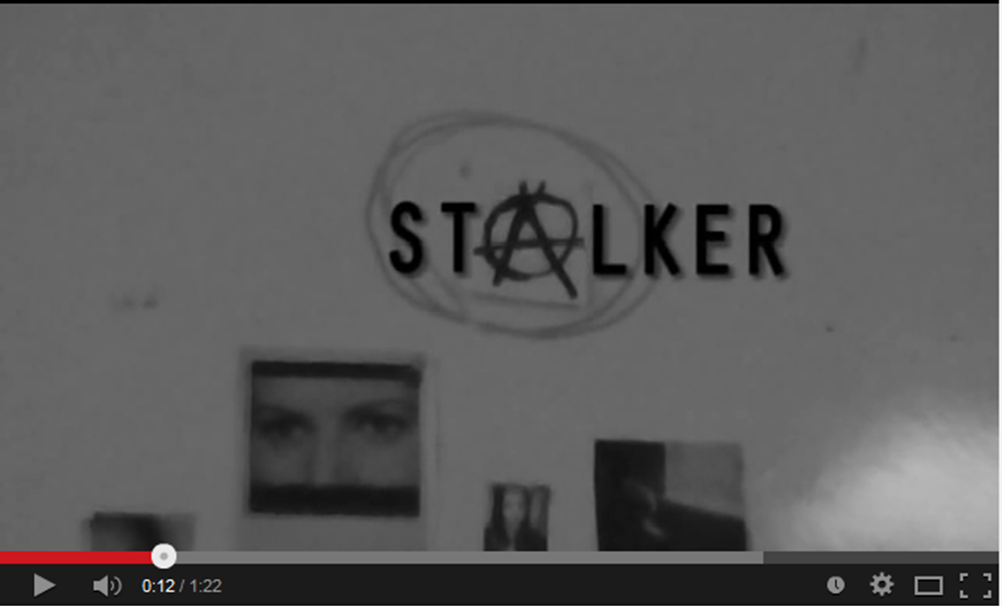 Symbols are used to show meanings and a narrative through signs, for example in this picture the 'A' in the circle symbolises anarchy, and foreshadows what is to come.
The Cultural Code
This makes the narrative to make sense, and show the cultural and social atmosphere that should be created during the film. In my preliminary task we showed the scene to be in an office, showing the mood of the film (formal).
Code of Opposite
This code refers to a narrative that shows binary opposites, for example black vs white, male vs female. In my preliminary we used male vs female, and in this case the woman (playing the antagonist) outwits the man (playing the protagonist).
These also link into our main task. We would use things such as semic codes in our thriller as they are a key convention of a thriller, and entices the viewer in as it foreshadows what may be coming. In our thriller we could also use mystery code, because the 2 minute opening will make them want to keep watching, as they feel they will find an answer if they do so.
Wednesday, 5 November 2014
Conventions of a thriller
Conventions of a Thriller Movie
In a thriller, the usual scenario is a battle between a protagonist and an antagonist, when one disrupts the other. Usual a set of bad events happen, setting the scene for a climax at the end, often a build of to suspense for the end of the film. The protagonist tries to out do the antagonist, and often (not all the time) justice is restored.In thrillers there are many different conventions, these include:
-Tense music
-Quick cuts
-Black and white shots
-Protagonist in mercy of Antagonist
-Variety/Montage of shots
There is, most often, a single/group of characters that make up the protagonist, and they virtually always fight for justice, whilst in most thrillers the antagonist usually has a hidden identity at some point in the film, adding mystery code to the thriller. The story line is often quite realistic so that the person watching thinks it could possibly happen them, involving them and adding emotional connections with the film.
Camera shots like close up and extreme close ups would be used to show the emotion of the character, to set the tone for the scene. Along with the camera shots, music would be played in the background to enhance the mood for that particular scene even further.
Music in a thriller is key for the mood of any scene, and it can also send a message to the audience ie. making the them happy, or making them scared. In the majority of thrillers it builds up suspense, and the music will often get louder as more of something is revealed, to make it more dramatic.
Mise-en-scene:
-The location is key because it establishes the theme of the thriller.
-Lighting so that the theme can be further established
-The costumes play a key part in the mise-en-scene as the characters personality is clearly displayed through them.
-Saturation and colours used in the film show the theme and mood.
This links into our thriller as we are going to use some of these ideas, for example the lighting, in our thriller for a more sinister effect. We will use sharp music, similar to that use in the shining.



Wednesday, 22 October 2014
What is effective about S2:E6's opening to Utopia?
This is the recent exam question I did on an opening to a TV drama, Utopia.
It is effective because it reflects the zeitgeist and people can relate to it in everyday life. This is because everyone seems to be worried about the environment and what can be done to change it. However, it tells you in an extreme way what can be done to change it and draws you in because it mentions the killing of a child, which is not only evil, but it adds tension and meaning to the message.
The camera shots are effective because a wide range of shots are used, adding dramatic effect to the scene. For example a close up is used to show the emotion on the speakers face and how serious he is when he talks about killing the child, and the exact antithesis is shown on the child's mothers face; perhaps portraying the emotion of most of the viewers faces- involving the audience, making it effective. Other shots, such as two shots are used to show the conversation and the use of a low angle at the end shows the evilness of the man who spoke of killing and 'innocent' child, which is also used at the start of the scene, making the viewer anticipate him being evil.
The representation of gender is effective because the man is shown as clever by showing his knowledge through using facts and figures. The way he speaks shows his evil tone, and it is he is seen to be dressed in black-a dull colour to again, add to the subtle evilness of him. The woman is shown to be 'aware' of the environment but doesn't actually know a great deal-suggesting that most people, in this instance women, use a token of good gestures but what they do doesn't have a significant impact. The woman is again shown as the exact opposite of the man aa she seems innocent and actually cares about her child. The man is also shown to talk over the woman in a passive aggressive way, which adds the gender stereo-type that men are better than women-making it effective because it will create discussion between genders, luring them in to the programme and making them want to watch it.
It is an effective opener because of the music used to creat tension and suspense, with non-diegetic sounds used as the programme is shown at 10 at night- just after children are put to bed and although sinister it could entice you in to watch it.
Monday, 20 October 2014
Subscribe to:
Posts (Atom)